
Pending sales and new home construction both stumbled in September, while safe-haven demand boosted bonds. Here’s what you need to know.
· Pending Home Sales Fall Sharply
· Homebuilding Loses Momentum
· France Unrest and AI Debt Concerns Fuel Bond Rally
· By the Numbers: Jobless Claims
Pending Home Sales Fall Sharply
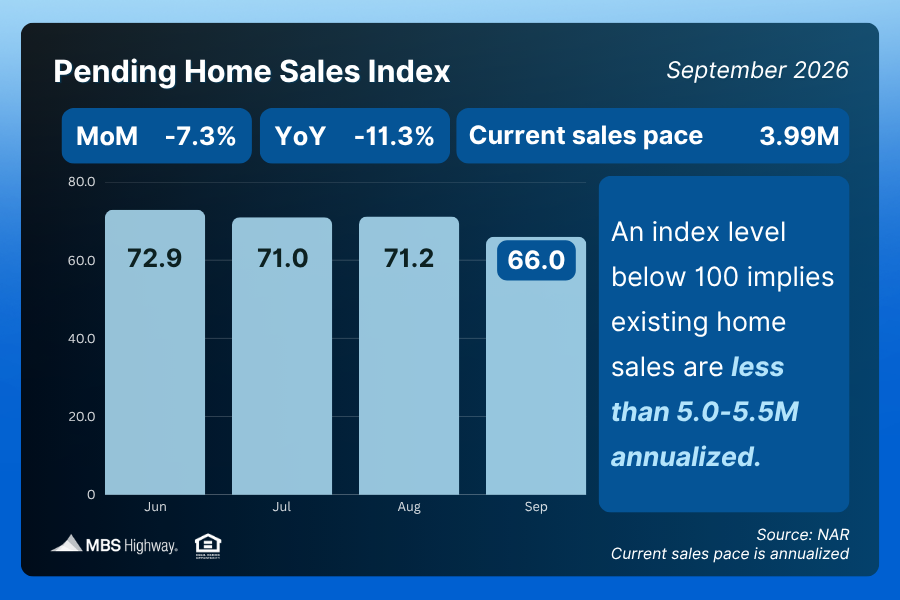
Pending home sales, which measure signed contracts for existing homes, fell 7.3% from August to September and 11.3% year over year. All four U.S. regions saw declines over both periods.
Bottom line: As NAR Chief Economist Lawrence Yun put it, “Market conditions weakened in September due to fast-rising mortgage rates,” which may be prompting buyers and sellers to put their plans on hold.
Homebuilding Loses Momentum
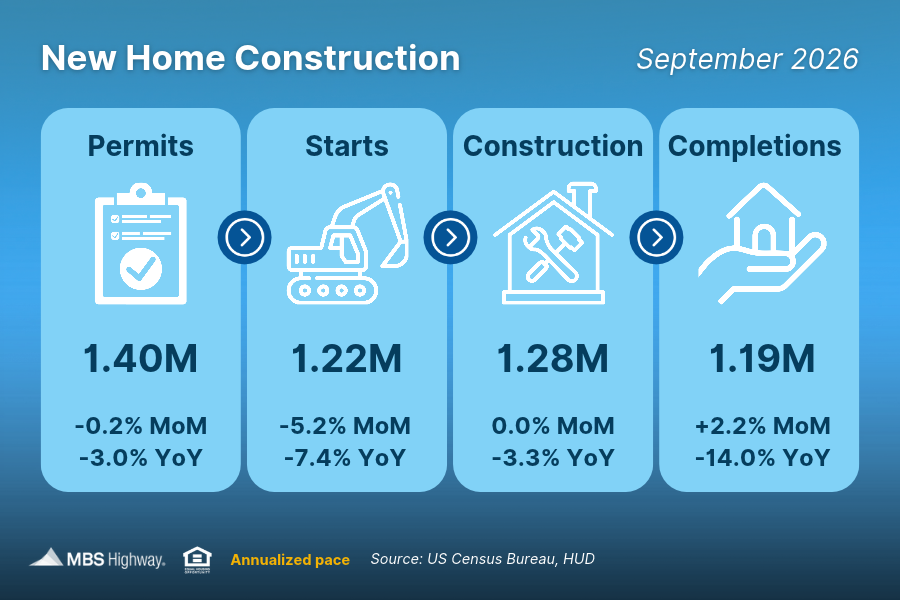
New home construction slowed in September, with housing starts falling 5.2% from August to an annual pace of 1.22 million homes, below expectations. Housing starts measure how many homes begin construction. Meanwhile, home completions fell 14% year over year to an annual pace of 1.19 million, as builders contend with softer demand and higher costs.
Building permits, a gauge of future construction, also edged down 0.2% from August to an annual pace of 1.4 million.
Builder confidence continues to weaken amid elevated mortgage rates, labor shortages, and rising energy and material costs. The National Association of Home Builders’ Housing Market Index fell three points in October to 29, its lowest level in 14 years. A reading below 50 indicates that more builders view market conditions as poor than good.
Bottom line: High mortgage rates are discouraging some homeowners with pandemic-era low rates from selling, while permitting and construction timelines limit how quickly new homes reach the market. These supply constraints could help support home prices in the months ahead, particularly in markets where housing supply remains limited.
France Unrest and AI Debt Concerns Fuel Bond Rally
One of the week’s key market dynamics has been a flight to safety in the US bond market, driven by unrest in France and growing concerns over AI-related debt. France has seen more than 500,000 protesters, widespread rioting and looting, and curfews. Rising French bond yields have coincided with increased demand for safer assets like US Treasuries.
Meanwhile, concerns are growing over the debt AI infrastructure companies like CoreWeave, Nebius, and Oracle have taken on to fund massive data center expansions. Recent comments from Tesla and Meta about more disciplined spending have added to those worries. If major customers scale back spending, neocloud companies could see slower revenue growth, raising further questions about their ability to repay their debt. Their stocks have come under pressure, adding to demand for the safety of US Treasuries.
While market sentiment continues to shift, safe-haven demand was an important driver of the bond rally.
By the Numbers: Jobless Claims
Unemployment claims have told the same story in recent weeks, with initial filings remaining low at around 194,000. But the figures may not tell the whole story: some people who lose their jobs may turn to freelance or gig work rather than apply for unemployment benefits.
Meanwhile, continuing claims rose by 25,000 to 1.73 million. Although they remain below recent highs, the decline doesn't necessarily mean more people are finding jobs. Some workers may have simply exhausted their benefits.
Related posts

Housing Headwinds, Safe-Haven Bond Rally


FAQ: Why does so much of my early mortgage payment go toward interest?

Inflation Heats Up, Home Sales Edge Higher
Ready to close more deals?
ListReports automatically delivers personalized marketing collateral to your inbox helping you engage with your customers and prospects.